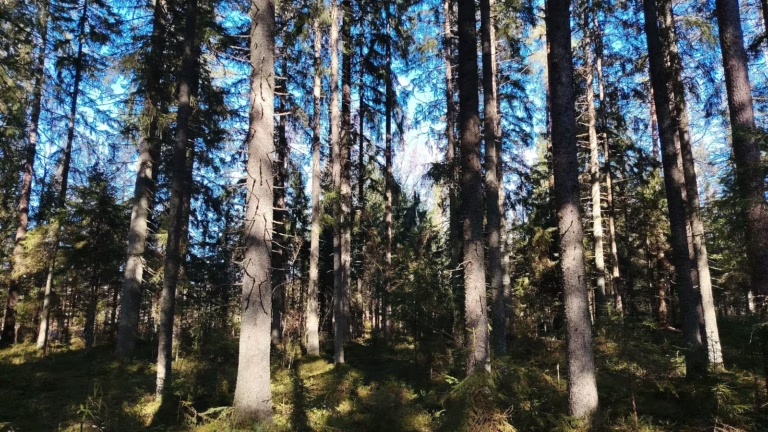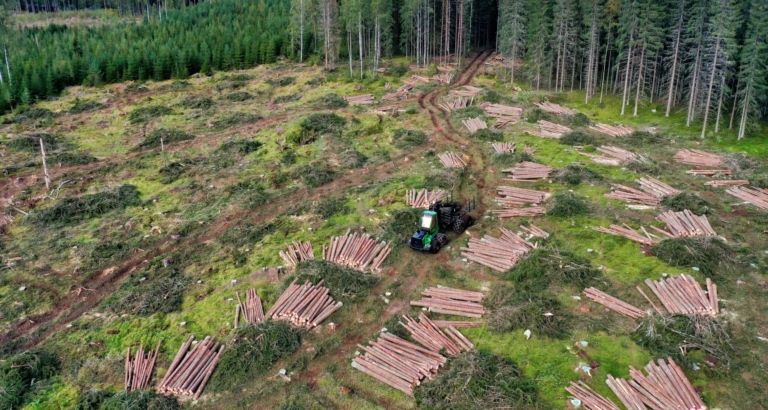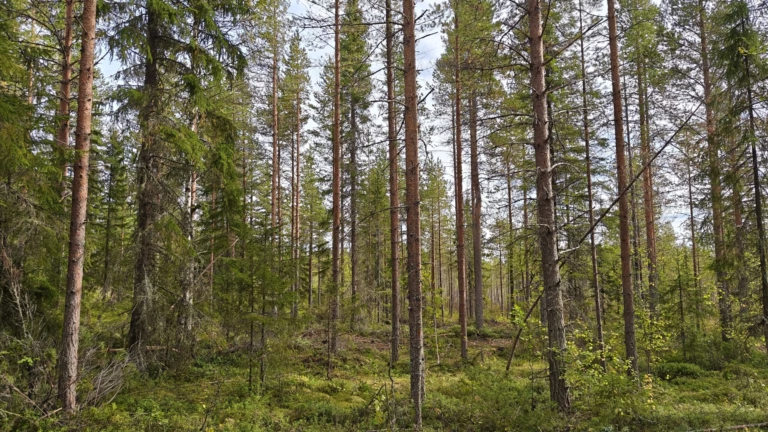

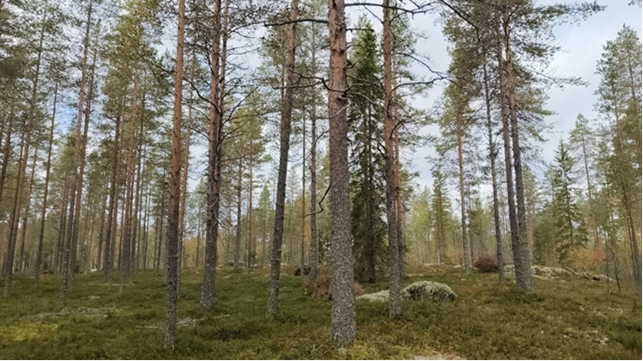
By no means are all properties selling at the moment. Photo: Pasi Heikkinen.
The forest property market is currently seeing a record supply of properties. At the same time, time on the market has lengthened and the share of unsold properties has increased.
During the current year (January–October), 2,000 properties of over 10 hectares of forest land have come onto the public market, which is 8% more than during the same period in 2023 and 12% more than the average over the previous five years. October was a particularly busy month for forest property supply, with just over 300 forest properties coming up for sale. Compared to last year, the supply of forest properties has increased especially in Central and Northern Finland.
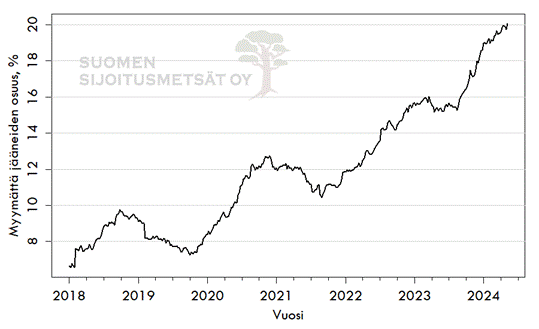
Despite the increased supply, the number of forest property transactions had been on a downward trend until last summer, and the recent growth in transaction volume has not been proportional to the increase in supply. This is reflected, on one hand, in longer marketing times and, on the other hand, in an increase in the share of unsold properties.
In the current market situation, sales without a deadline for submitting offers are on the rise, which explains part of the longer marketing times, but brokers are also setting longer marketing periods themselves. At the national level, every fifth forest property put up for sale already remains unsold, a share one-third higher than a year ago. Both average marketing times and the share of unsold properties increase when moving from south to north.
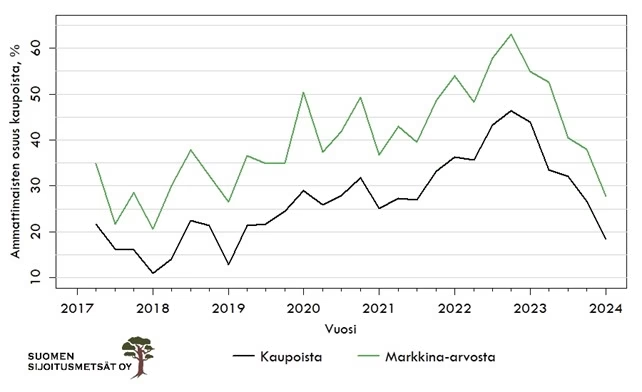
“A significant factor in the weaker demand for forest properties is that activity among institutional forest investors has fallen to less than half of its peak,” explains Eero Viitanen, Head of Forest Information at Suomen Sijoitusmetsät.
“Professional buyers are also more selective than before in the cooled market,” continues founder Mika Venho. “At the very least, the forest property market is less of a seller’s market than it has been for years,” Venho says.
The structure of forest property supply has changed in recent years. Properties now coming up for sale have more timber and fewer young stands than before. Unsold properties generally have weaker characteristics, meaning they have lower growing stock and poorer site types. On the other hand, these differences are partly explained by geography: the share of unsold forest properties is higher in the north.
Let’s talk about forest investment
Want to know what this means for your forest assets or investment objectives? Tell us about your situation and one of our experts will be in touch. We always start with analysis, not sales.

We process your personal data in accordance with our privacy policy.