
Profitable forestry
Forest management and silviculture can be quite diverse. From an investment perspective, the most important factor is that forestry is profitable. The new Forest Act, which came into force at the beginning of 2014, enables both even-aged forestry and continuous cover forestry. With the help of an expert, it is easy to choose the more profitable model for your forest land.
Even-aged forestry?
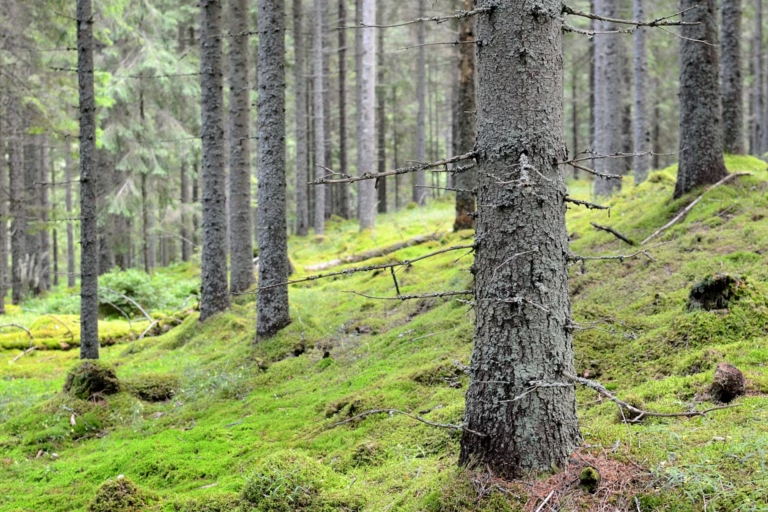
If even-aged forestry is chosen as the guideline for forest management, the tree stock in stands consists predominantly of trees of the same age and size. In thinnings carried out at appropriate times, trees in poor condition, among others, are removed to give the best trees more growing space. When the tree stock reaches an economically viable size, it can be regenerated. To keep forestry sustainable, new tree stock is established, for example by planting seedlings.
Or continuous cover forestry?
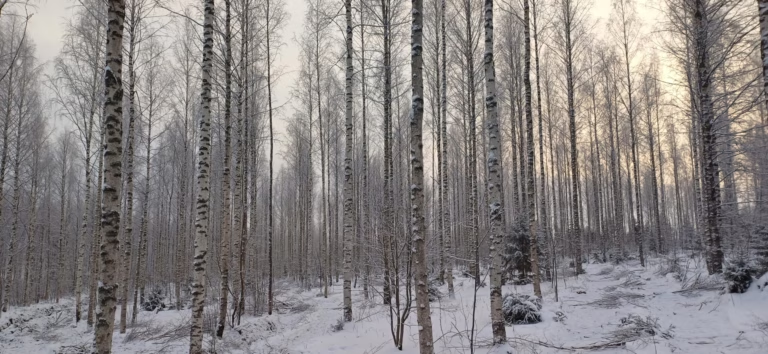
In a forest managed according to the principles of continuous cover forestry, there are trees of all sizes, which is why the method is also called uneven-aged forestry. Harvesting is carried out in such a way that the largest and poorest-condition trees are removed from the stand. Good smaller trees are left with room to grow. In this way, the forest regenerates naturally and remains continuously covered.
Profitable forestry in your forest
When the right treatment methods are selected for each site, the result meets the forest owner’s objectives and ensures the profitability of forestry.
Let’s talk about forest investment
Want to know what this means for your forest assets or investment objectives? Tell us about your situation and one of our experts will be in touch. We always start with analysis, not sales.

We process your personal data in accordance with our privacy policy.